
 English
 中文
 ไทย
 Tiếng Việt
3104 Aluminium Coil for Can Body Stock
Can body, including bottom
| Alloy | 3104 |
|---|---|
| Application | Can body, including bottom |
| Standard thickness | 0.2–3.0 mm; custom sizes accepted |
| Finished thickness capability | 0.2–3.8 mm (cold-rolled) |
| Hot-rolling width | 1150–2150 mm |
| Width (finishing) | 1200–2150 mm |
| Max coil weight | 32 t (export coils) |
| Surface (3104) | Mill finish; pre-oiling available for can body stock |
| Twin-stand equipment | 2000mm |
| Temper / tolerance / order specification | To be confirmed against your application |
The dimensions above describe factory capabilities and standard sizes. Final alloy, temper, width, thickness and tolerance must be confirmed for the order.
Application scenarios
Scenarios: Beverage can bodies including can bottoms; aluminium bird's-nest bowls; general stamped parts.
Why it fits: Stable performance in high-speed can-making; clean, bright surface ready for coating and printing; strong formability and corrosion resistance.
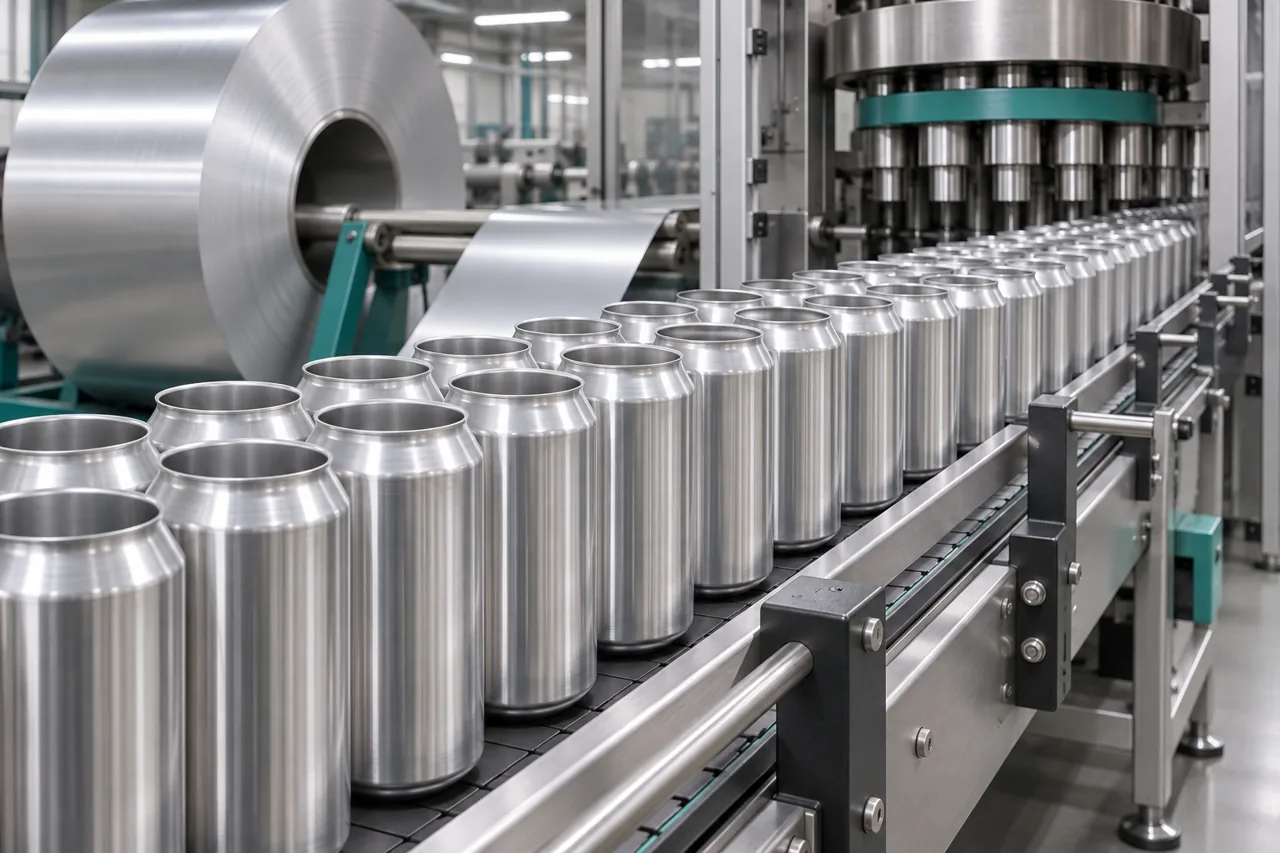
What 3104 coil becomes.
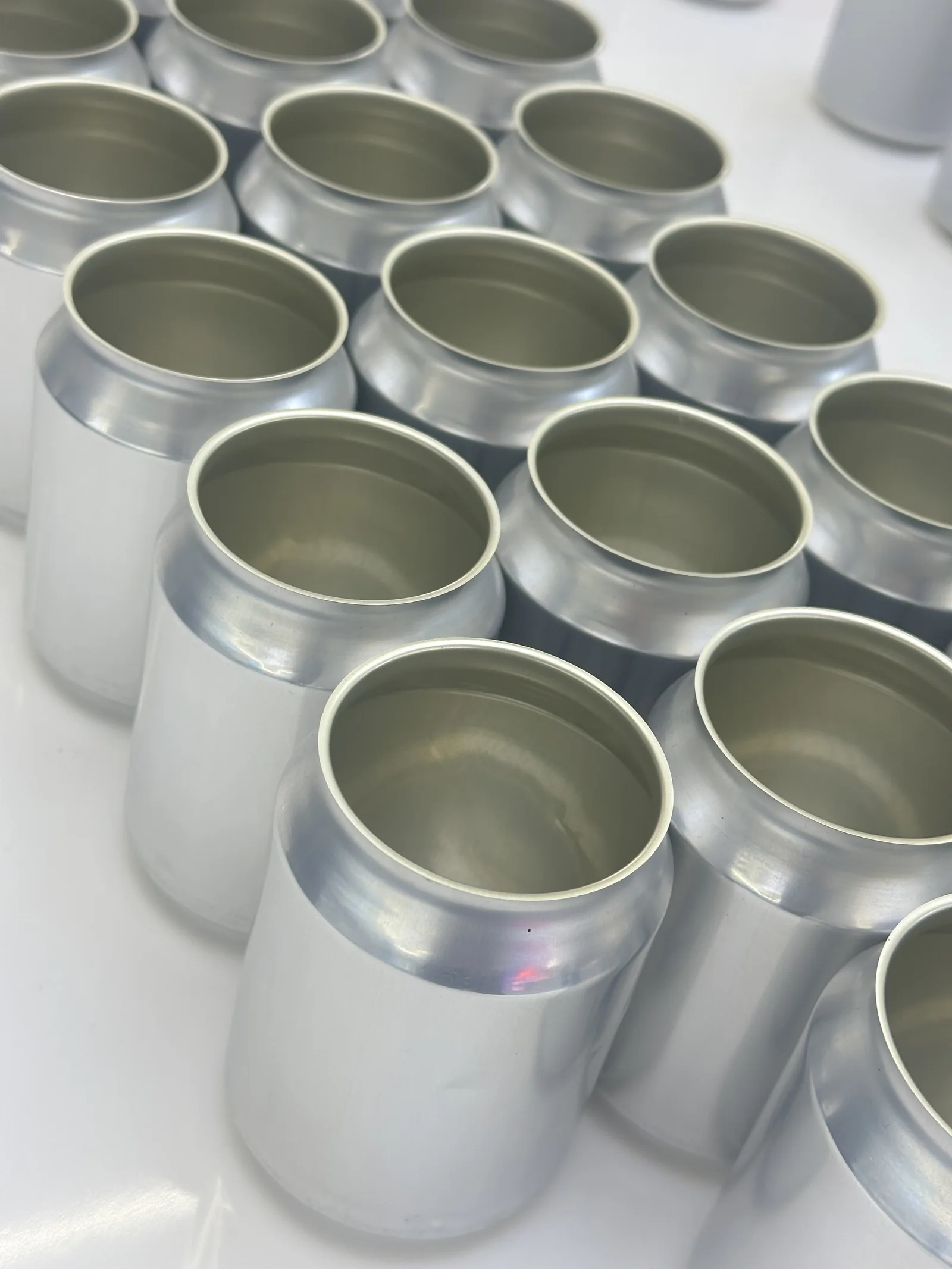
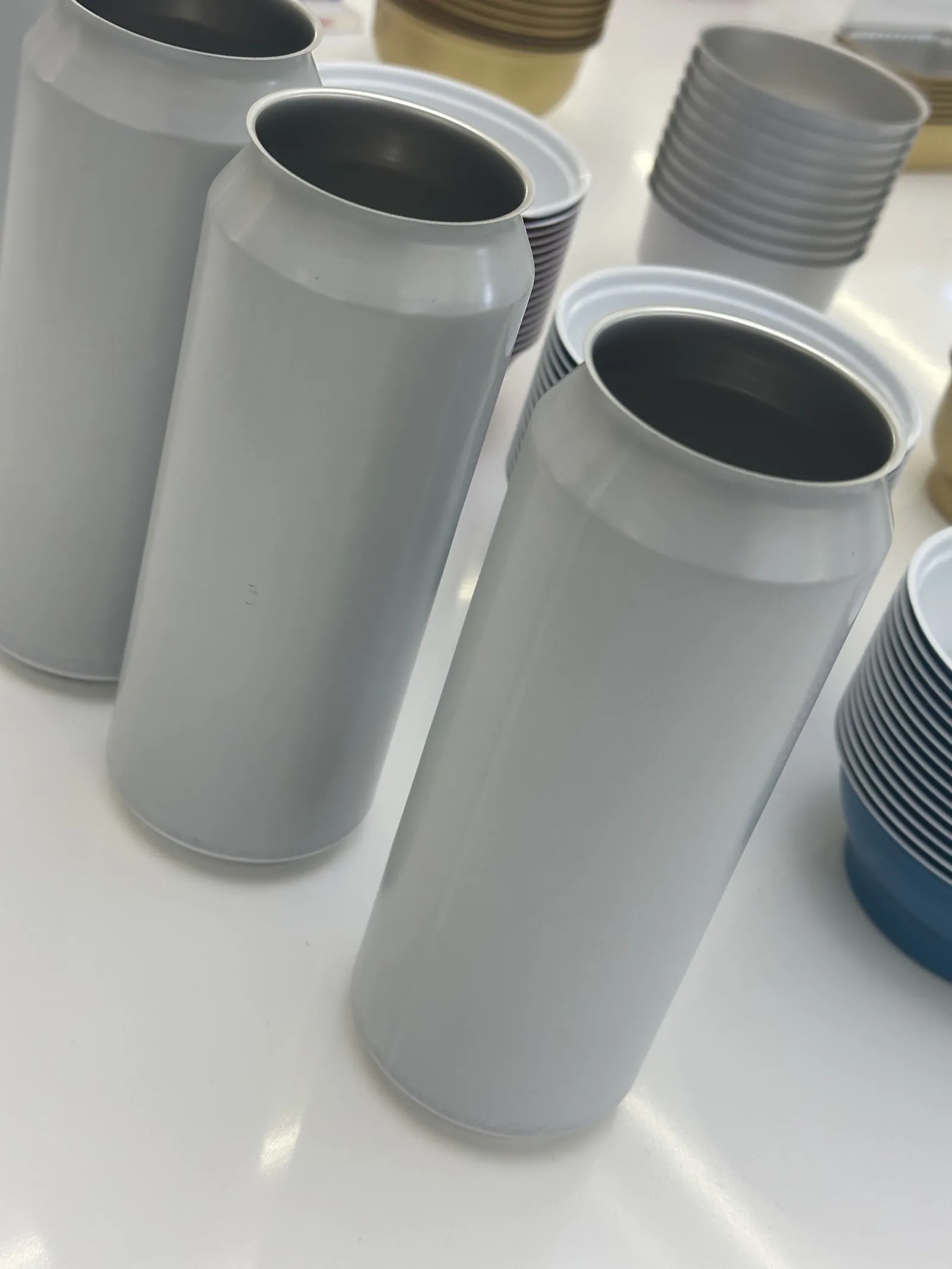
Finished can bodies on display in the factory showroom.
3104 vs 3004: choosing can body stock
Both alloys are 3xxx-series aluminium–manganese grades with magnesium. The difference is what each one is tuned for.
3104 is the standard can-body alloy today. It was developed for high-speed draw-and-iron lines: the composition is controlled for deep drawing, wall ironing and the clean, bright surface that coating and printing need. 3004 is the earlier general-purpose can-body alloy and is still used for body stock and for other deep-drawn products — but for a new can-body programme, 3104 is the usual choice.
The main composition difference is in the impurity limits. 3104 has higher registered maximum limits for iron and silicon than 3004. The magnesium range is the same, and the manganese ranges overlap. Compare mechanical properties and forming performance against the specified temper, gauge and line requirements. What separates them in practice is temper and line tuning: can-body 3104 is normally supplied heavily cold-worked (H19) for D&I, while 3004 is also supplied in tempers such as O, H14 or H34 for general forming, chosen to suit the part.
| 3104 | 3004 | |
|---|---|---|
| Alloy system | Al–Mn–Mg, 3xxx series | Al–Mn–Mg, 3xxx series |
| Manganese (Mn) | 0.8–1.4% | 1.0–1.5% |
| Magnesium (Mg) | 0.8–1.3% | 0.8–1.3% |
| Iron (Fe), max | 0.80% | 0.70% |
| Silicon (Si), max | 0.60% | 0.30% |
| Copper (Cu) | 0.05–0.25% | ≤0.25% |
| Temper for D&I can body stock | H19 (draw-and-iron) | H19 where specified and qualified |
| Primary use | Beverage can bodies, including bottoms | Can bodies and deep-drawn products |
| Our supply position | Primary can-body product | Can also be produced; not the primary product |
Composition limits follow the EN 573-3 / GB/T 3190 registered values. Exact values are confirmed on the mill certificate for the ordered thickness and temper — send us your specification and we will confirm against it before quotation.
Frequently asked
questions
What thickness range do you supply for 3104?
Standard range is 0.2–3.0 mm, with custom sizes accepted; our cold-rolled finished range overall is 0.2–3.8 mm.
What widths are available?
Finishing width range is 1200–2150 mm; hot-rolled stock runs 1150–2150 mm.
What is the maximum coil weight?
Export coils up to 32 tonnes.
Can you pre-oil the surface?
Yes — can body stock can be pre-oiled on an imported oiling line during finishing.
What is your minimum order quantity?
MOQ is confirmed per order before quotation, together with grade, temper and thickness tolerance.
What certifications does the factory hold?
Our factory is certified to ISO 9001, ISO 14001 and ISO 45001 for the production of aluminium sheet and strip.
Let’s talk can stock.
Share your alloy, dimensions and intended application.